I Talked to a Bunch of Third Graders…and I Liked It


If you are a regular reader, then you already know I don’t often invite guest bloggers to post here. But my friend Lizbeth who blogs over at Four Sea Stars wrote an awesome post today about a subject close to my heart - parents speaking fearlessly about autism directly to those who are in their child’s life. I believe in this approach and have often lamented this wasn’t done for students I’ve known in the past. Lizbeth’s approach to speaking with these kids was genius. And she succeeded in positively impacting the relationships between her son and his peers. She also made me cry.

If you are thinking about taking this approach to helping your child’s peers and teachers better understand him/her, you need to read this post. It will warm your heart.

-Leigh

I went into school the other day to talk to Alex’s class about Autism. Nothing instills fear in me as much as talking to a small hoard of third graders. Kids—they are unpredictable, they are young and for the most part, they say what’s on their mind.

They scare me.

Earlier in the year we had an incident where Alex was bullied and that spurred the question of, “What do the kids know about Autism? Do they know anything? Do they even know he has it?” The answers came back as no, no and no. The kids knew nothing.

I though that maybe if they knew something, heck anything, there may be some compassion. They may have some understanding of why he does what he does and maybe with understanding would come some form of acceptance.

I’ll be the first to tell you, I worked with our school to do this. Our teachers are great and in some ways I am really blessed. They get it. They get Alex. They get me and they are willing to work with the things I suggest.

I had a PowerPoint presentation and from that presentation, I made a book for each child in Alex’s class. I wanted each one of them to have something to bring home so their parents could see what we went over in class. Truth be told, I did it in the hopes that the parents would know what I talked about, and maybe just maybe, there would be further discussion at home.

Anyway, it turned out to be really interesting. And enlightening. For all of us. The kids were really interested. The teacher had told the students on Monday I would be coming in, later in the week, and asked if they had any questions about Autism. None of the kids knew a stitch. They wanted to know things like:

  • Can I catch it?
  • How do you get it?
  • What is it and where does it come from?
So when I went in last week, we had the presentation on the White Board. They use this all the time in class and it’s basically a computer screen on a white board (imagine that) on the wall. The kids all sat around in a circle eating their snacks and before I could even start a boy asked, “What is it?”

Breathing Room: On Tiny Houses


Now I know the feeling.

All across the country right now, on morning shows and news sites, the tiny house movement is all the rage. It’s a cool concept. Folks sick of chasing the ever-increasing size of the American dream re-evaluate their needs and downsize their homes. The idea is to take quality materials, some ingenuity and efficiency in design, and construct a home less than 800 square feet or so. Tiny house proponents point out that a person can own their own home for around $10,000 – give or take a few for size. Tree hugger types think it’s pretty groovy, as tiny home dwellers reduce their carbon footprints and have to find new and often green ways of doing things.

I think all this is great. Really, I do. At least in theory – and for somebody else. You see, I happen to know from experience that a tiny house is not for me.

Four years ago, my family went through some tough times. We had just had our first child, following an awful pregnancy. I had hyperemesis my entire pregnancy (and the one that followed). This meant that I was out of work a lot. I was hospitalized a couple of times, went through some expensive testing, and still incurred the typical costs of a normal delivery and hospital stay. My husband was laid off from his job, and money got tight. When the larger home we were renting became a struggle to afford, we made the decision to move into my very small rental home. I’d lived in it before – when I was single. We knew it would be a bit of a sacrifice to downsize from a three bedroom/two bath to a two bedroom/one bath, but we went for it anyway. We packed up a bunch of our stuff, put it into storage, and moved in. We intended it to be for a year. But autism therapy, the economy, and further health problems intervened, and we eventually made the decision to live off of my teacher’s salary alone and put my husband through nursing school. One year stretched to four.

Now I do not want to give the impression that I was ungrateful to have a roof over my head. We knew it was a blessing to have the option to live somewhere rent/mortgage free. Really. And it was okay for awhile. Our daughter was just 5 months old, and she didn’t take up much room then. That is, until 15 months later when she was ambulatory and her baby brother came along. By the time he starting walking too, we began to sympathize with sardines. Tiny house lovers can do and live as they wish. I’m glad they’re happy, and I know it’s great for some folks. But I’m here to tell you, less than 800 square feet is not a lot of room for a family of four.

We tried getting inventive. We closed in the back part of our car port and created a combination pantry, storage, and communal closet. We installed floor to ceiling shelves in our bedroom closets. And we even installed floor to ceiling shelves on one wall in the kids’ room. We used underbed storage. Space saver bags. We even pulled up a trailer bed and decided to de-junk our lives of anything we hadn’t touched in a year. I kept saying that we just needed to think more like NASA – to think small, outside of the box, and to use every inch of vertical space that we could.

But I hadn’t considered something that those smart folks at NASA do. They actually take into consideration the psychological effects of cramming so many people together in a small space. They know it’s stressful. They have teams of psychologists who plan for this stuff. Theorizing what might happen in a similar scenario on futuristic trips to Mars and such. They don’t underestimate the potential impact.

One would think that it is easier to keep a tiny house clean. But it’s not. When everything you have is right there, then everything you have is right there. Underfoot. Making you slip, trip, and curse. Stubbing your toe on every pass. You open the single medicine cabinet in the house and carefully reach for a bottle in the back – only to have them all come spilling off the shelf. You attempt to cook dinner and end up being snippy with anyone who dares to enter the kitchen - because there simply isn’t enough room. You can no longer enjoy the crafts and hobbies you used to, because there is not enough horizontal space to spread them out. It seems that every time you turn around, somebody is looking for something that cannot be found amidst all the other stuff that has no place to call its home. The walls close in, tempers rise, and children bounce off the walls. And you want to be anywhere else. But going elsewhere always costs money. The money you didn’t have enough of to begin with.

But, like every other challenge in life, your circumstances become your reality. And you just…deal. We honestly forgot what it was like to have space. To have room to organize things in a logical and accessible way. To not be surrounded every minute of every day with everything we owned. Yes, we were definitely looking forward to my husband graduating nursing school so that we could move. But I know we didn’t really grasp just how much stress our tiny house was contributing to our lives.

Until a week ago. A week ago, we finished remodeling work on my father’s home and moved in. And it was…heaven. Everything has a place. Unsightly things are all tucked away. And I know where everything is. Countertops are clear. The floors are safe to traverse. My children are basking in the joy of their own spaces. It’s by no means a large house. Just a simple three bedroom, two bath home with an open, combined kitchen/dining/living room. But we have big closets and ample storage. And we can now actually invite people over to visit. There is room for them to sit down. We feel like we can breathe again. And I am just now realizing how very little air we really had just a couple of weeks ago.

This house my dad left me is a blessing in so many ways -which is so messed up when I really think about how I got it. Of course, I know it is what he wanted. Every parent hopes to leave something to their children. I just have such mixed feelings sometimes about enjoying it. But I tell myself that is just likely part of my grieving process and try to enjoy it anyway. Daddy was a practical man, and he would tell me wallowing in guilt won’t help anything. I’m trying to keep that in mind. I’m trying to focus instead on this blessing and the relief it provides to my already over-stressed family. And I’m mostly just smiling about the obvious delight my children are taking in their new home. They’re happy.

So I guess the only thing for me to do is to try to be happy as well. For I really do believe that happiness is mostly a choice. But, like every choice, the battle between head and heart is a hard one, now isn’t it?

Whereupon Callum Demonstrates His Problem-Solving Skills: A Photo Essay


Problem solving is one of those things therapist-types evaluate when working with autistic children. Which is why I was all sorts of amused last night at Callum’s antics attempting to wedge himself into the space in the new coffee table. I’d say he gave it a good effort, wouldn’t you?

I apologize for the poor quality of the pictures and for not dressing him up first. But, sometimes one has to seize the moment when it arrives. :)

Whereupon Callum Demonstrates His Problem-Solving Skills

Whereupon Callum Demonstrates His Problem-Solving Skills

This movie requires Adobe Flash for playback.

A Room of His Own


The pirate knobs I put on Callum’s captain’s bed drawers.

Earlier this summer, when it was decided that we would move out of our very small home into my father’s (which I inherited following his death in May), I began making plans to decorate Bronwyn and Callum’s bedrooms. They had been crammed into one tiny bedroom together — which was still pink. Time and toddlers had wreaked havoc with their room, and it was covered in carpet stains, crayon murals, and frequently broken furniture. All of their toys, a crib, and a bed - all crammed into one tiny space - made for chaos. And I was simply too overwhelmed by the hectic pace of working full-time and ferrying Callum to six therapy appointments a week. Stress leads to chaos and chaos to stress in an endless repeating cycle.

So I’ll admit this mama’s heart was cheered by the thought of creating two beautiful rooms for my babies. I wanted my little girl to feel like a princess. And I wanted the opportunity to finally prepare a charming space for a little boy — rather than simply move his crib into his sister’s room. I started with Bronwyn’s room - picking a lavender and pink butterfly theme. Then I got to brainstorming Callum’s room.

At some point during my chattering about decor ideas, a couple of people said to me, “Well, Callum won’t really care about his room.” Which, though that sounds somewhat insensitive, there is a degree of truth to that. Callum doesn’t care one bit about puppies, undersea, or dinosaur themes. But the statement and its accompanying reality stung a bit. It wasn’t meant to hurt. I think they were just concerned I’d be disappointed if he didn’t react to the room positively (or at all).

But I already knew I wouldn’t get a typical little boy’s reaction. For my sweet little man isn’t at all typical. What I also knew was that it didn’t matter to me one bit. I wanted to give him a beautiful space. Spacious. Colorful. Everything that any little boy deserves. I can’t give him group sports, an interest in Lincoln logs, or friends. Those are things he can’t access right now. Maybe not ever. Time will tell. But I could give him a beautiful room.

Virginia Woolf once stated that a woman must have “a room of her own if she is to write fiction”. No, Woolf wasn’t referring to autistic little boys in her feminist essay on women and fiction. But her belief that a person must have a personal space in order to be able to grow and create is equally true for all souls. Perhaps not a literal space, such as a room. But time to oneself in a place peaceful to the individual. A place in which one wants to be.

So, I set about giving Callum his place to be. We chose a pirate theme in deep red, tan, black, and gold. Found an adorable little bedding set and the accompanying drapes, etc. A friend traded me her little girl’s captain’s bed for an extra queen we had. And we painted the drawers the different colors of his bedding and set them off with little pirate knobs I found on eBay. A net, a ship, some pirate decor, and a big plush shaggy pile red rug for him to roll around on in sensory bliss.

No, he didn’t give us the joyous reaction that his sister did — at first. He needed to take it all in. But, within just a few minutes, he began flapping a bit. And within an hour he was gleefully bouncing on his new bed. (Yes, I know I’m a terrible mother. Don’t write me.) He found his favorite helicopter — and the attached string he likes to whip about. And - wait for it - he has peacefully slept (and stayed) in his new big boy bed every night. All night long.

Mama and daddy slept all night long too.

And so my little boy now has a room of his own. No, he doesn’t care about pirates. But he knows this is his room. A room in which he can grow, dream, and wonder. To flap, stim, and - yes -bounce on the bed. A place to go when ordered by his 5 year-old big sister to get out of her room. He likes it. He’s happy.

And that is the root of every prayer in every mother’s heart, now isn’t it?

A Room of His Own

A Room of His Own

This movie requires Adobe Flash for playback.

VID00016

VID00016

This movie requires Adobe Flash for playback.

Dear Well-Meaning Individual: So You Know An Autistic Child, Huh?


They’re just like snowflakes; no two are alike.

Disclaimer: I am not a scientist. These are my own views, based upon my own research and perceptions. The analogy I discuss below is one I shared with a dear friend of mine - who happens to be a doctor - and she thought it was a good one. This is merely my way of attempting to convey the complexity of autism to lay persons. If you want science, there are far more qualified persons than me to consult. The Thinking Person’s Guide to Autism is a great place to start. Those ladies are way smarter than me and speak the language of science. And The Autism Science Foundation won’t lead you astray.

The other night, an individual (I’ll allow to remain nameless) called to tell me all about how she met a woman with a grown autistic son who was doing so well that he is able to drive to the grocery store. She thought that perhaps I might want to meet said woman and see if the woman might have any “tips” or advice to offer me. It was obvious to me that she thinks my son hasn’t made sufficient progress (him being three, not toilet trained, and using just a few words) and that I could use some help. I ask for help frequently from parents of other autistic kids, but I resented the implication from this person that this other mother was the “success story” I could emulate - if only I were willing.

Being of the sort who tries to articulate my thoughts, I attempted to explain why I wasn’t interested in all of her recent -and frequent -suggestions. I tried to convey to her how many suggestions, cures, and treatments people have pitched to me. I tried to explain why we decided to end biomedical treatment. (It wasn’t working, and my views of my son’s autism and autism in general have changed.) I tried to tell her that I have reached a point where - though I do believe in the benefits and necessity of speech, OT, and PT and do research other promising and tested new therapies - I have accepted that Callum is mostly going to be who he is already wired to be. And that he is simply too young to assess how his individual brain wiring is going to affect his future. It’s trite, but - in the end - time will tell.

All I got on the other end of the line was…silence. The unmistakable indictment in silence. I grew frustrated and began babbling about how I wasn’t really getting across what I meant. Eventually, both of us tired of the awkward conversation and hung up. I walked away unsettled. Defensive. Wanting to cry. Knowing exactly what she was thinking. She’s given up on her child. She’s not going to try to keep helping him. She’s a terrible mother, and he’ll never talk or have a normal life because of her.

I’ve seen it in her eyes the few times I’ve seen her since then. And, despite still believing what I said, I am haunted by her disapproval and my own self-doubt.

There is a saying in the autism world - “If you’ve met a child with autism, you’ve met one child with autism.” On the surface, it’s meaning is obvious. Of course every child is different, right? Most people would nod their heads emphatically at that statement — autism or no.

But that statement means so much more than that.

What everyday people who don’t deal with autism in their everyday lives think about autism, they think about it much like diseases of the body. Diabetes. Coronary Artery Disease. Lupus. Conditions that can be tested for definitively and carry a consistent course of treatment. There are causes that can be identified, and symptoms that can be controlled via medications.

But what everyday people do not understand about autism is that those who have it aren’t at all like those who have specific physical diseases. There isn’t a typical progression of symptoms leading to the worst case scenario. Finding the cause of autism is comparable to finding the cause of cancer. Likewise, finding a “treatment” for it is equally daunting. Why? Because there is no such thing as plain old cancer. Cancer is a vast array of diseases with a vast array of prognoses. Just because you’ve been diagnosed with cancer - it does not mean that your chances of survival are the same as your neighbor’s. Thyroid cancer is a heck of a lot better news than pancreatic cancer. Ovarian much more devastating than minor skin cancer. And those cancers still are comprised of different types. Yet, we call them all cancer, right?

Autism is just like that. But it, like cancer, cannot be nailed down in terms of cause or even treatment. A breast cancer victim will not be cured by removal of her prostate, now will she? And the cellular events leading to her cancer are likely very different from the causes of the prostate cancer patient’s.

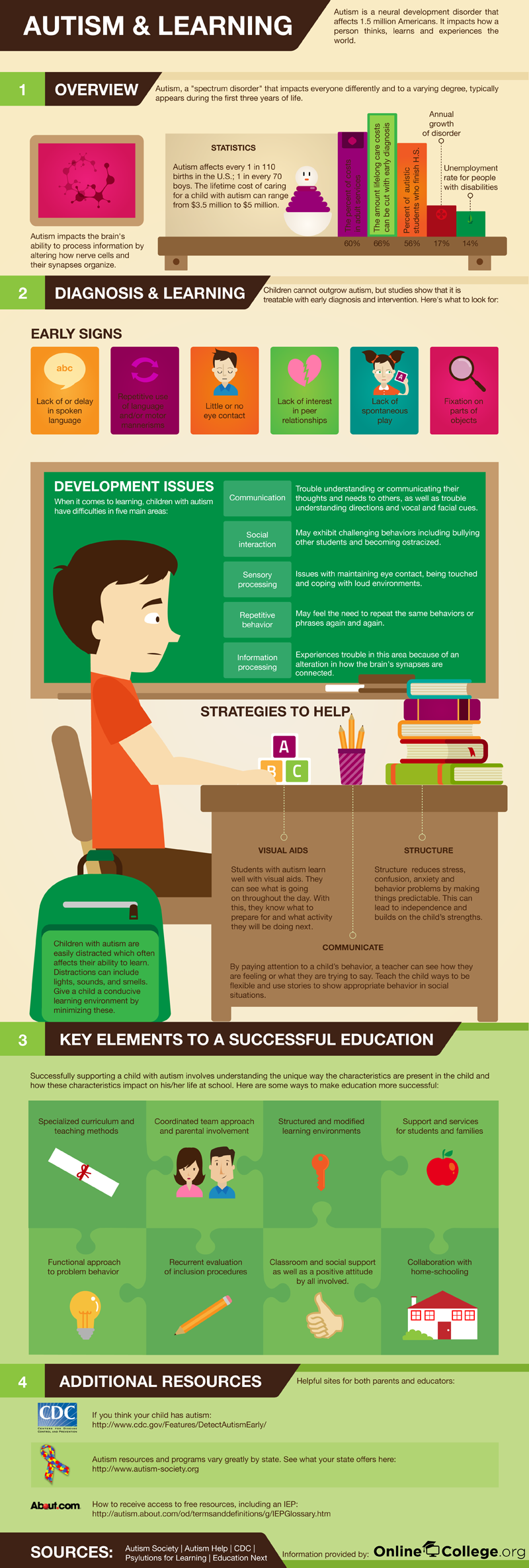
What I’m trying to say is autism is not really one disorder. That’s why its called autism spectrum disorder. It is a description of a variety of similar traits — of highly divergent degrees of severity. Some children with autism aren’t impacted with speech difficulties. And some children will never speak. Some will excel academically and earn graduate degrees. Some will never learn to read. Some autistic adults grow up to marry and have children. Some cannot tolerate the touch of another human being. They are not the same people, and they do not have the same disorder. It just carries the same umbrella term. What created the differences in the brain wiring of one individual on the spectrum did not necessarily create the differences in another. The reason there isn’t a definitive “cause” of autism is because it likely doesn’t exist. There are genetic links. There are suggestions of environmental factors. Prematurity increases risk. Some forms may be merely a natural variation in the human spectrum. The causes appear to be many. Therefore, the effects are many as well. Which means that what will help one autistic person isn’t necessarily going to help another. And some on the spectrum don’t need our “help” at all.

It is not the fault of their parents for what they did or did not do in terms of doctors chosen or treatments attempted. One child’s autism is not another’s. No more than one person’s cancer is another’s. So calling up the parents of an autistic child and telling them all about what “fixed” another person’s child or comparing autistic children to one another is an exercise in futility - and cruelty. Would you call a lung cancer patient and berate her that she isn’t doing as well as your neighbor who had that spot of skin cancer removed from her nose? I think not. But people do it all the time to us.

Our children are individuals with individual differences. And assuming that a severely autistic child will do just as well as a mildly autistic/Asperger’s child using the same interventions is a cruel misconception. Why? Because it automatically points a finger toward his parents, his school, his therapists. And it suggests that the child may not have fulfilled his own potential. This is not to say that parents should just give up and allow nature to take its course. Yes, there are interventions that can greatly help children across the autism spectrum. But I believe that we must consider the starting point of each child before setting our goals. If goals are reached, then you set another one. Sometimes amazing things happen that way and children seemingly without hope reach unpredicted milestones. But the harsh reality is that some autistic children’s wiring is so severely impacted that they will never function independently. And it isn’t pessimistic; it’s realistic. It is accepting the child for who he is while working to help him be the best him he can be.

So, friends and family, acquaintances and strangers, I respectfully ask that you back off. You might not know what you’re talking about. You mean well, we know. But we already have our hands full trying to maximize the potential for happiness - in whatever form it comes - in our children. We don’t need amateur neurologists theorizing what we could be doing differently. It’s insulting. It’s frustrating. It hurts. If you want to help, how about calling and saying, “I know you’ve got your hands full. Do you have a project around the house you think I could help with for an hour or two? Do you need an hour or two to yourself? Do you need me to run an errand? Or take Susie to dance class, etc.?”

That’s the kind help we really need.

She Took the Words Right Out of My Mouth


Several years ago, when teaching research to students, I insisted upon them using index cards. It’s an old-fashioned method now, but one that stands the test of time. It forces a child to place just one fact or idea at a time on a card, and then to cite the source. Later, they assemble all of their cards in a logical order, and use them as a guide to write their first draft. It teaches them how to paraphrase and think/write original paragraphs. Otherwise, it is entirely too easy for them to plagiarize.

When I taught this to my students, I always talked about the dangers of plagiarism — how it could get them kicked out of college, fired from a job, or sued. But I didn’t talk much about the morality of it. I didn’t explain to them how violated a person could feel by the theft of his own words. I didn’t convey that to plagiarize something is to wrong the person who wrote it. I confess that my own thinking was centered upon the negative effects on those who commit plagiarism rather than the victim.

Now I know differently. Earlier this week, it was brought to my attention that a woman was copying and pasting my work here to her own Facebook page. She has over 1000 followers. Not only did she copy and paste my pieces in their entirety without asking permission, she didn’t give me credit. And — she substituted my child’s name with that of her own child.

Because she has so many followers, I got to read all of their comments praising her as a writer and encouraging her to turn my work into a book. Not once did she correct any of the dozens of comments under each post she stole from me. Instead, she basked in their praise.

Naturally, I decided to research her a bit further. I found that she is on the board of an autism non-profit. I found articles about her efforts on behalf of autism families in her community, and the charity’s website. I also located her workplace’s website and saw a smiling picture and a glowing write-up of her character. She also is an autism mother, a wife, and holds a full-time job outside of her home.

Conveying my feelings about her and her actions is difficult. On one hand, I am furious. Those posts are me. My life. My scars. My child. I earned those words. And though I may have some mixed up feelings about how what I’ve always dreamed of doing — writing — came as the result of my child’s autism, I take pleasure in writing. It is my outlet, my voice, and my opportunity to connect with others who share my feelings. It’s me. She stole me.

At the same time, I pity her. As a special needs parent, she most certainly shares those feelings as well. Clearly, she has not yet found a way to express them. And, sadly, it is obvious that she desperately needs the attention and admiration of her friends and family. Enough to risk getting caught plagiarizing. I can’t imagine how humiliating that would be for her. Her husband and family. The non-profit she is affiliated with. It’s a small city. Hailing from one myself, I know what she would be facing. Knowing that, I can’t imagine why she took the chance. My blog has a pretty good readership (thanks to all of you) and my Facebook page three times that. The odds of her being caught at some point by someone she knows (and she has Facebook friends from her autism non-profit on her page) were pretty high. And, eventually she was caught. Not only did she plagiarize me, she stole someone’s else’s article right off of a well-known website. (That author has forwarded it to that company’s legal team.)

In my thinking, this woman clearly has problems. And, as angry as I am, I don’t wish to see her life destroyed. She did what I asked — to take them down. (Although her response was a terse “done” rather than an apology.) So, I’m not going to sue. I’m not going to out her. I’m not going to message all of the friends who praised her “writing talent”. I’m going to forgive her and give her a chance to learn a lesson — and perhaps practice a little introspection.

If she is reading this right now, I have something to say. You really lucked out in the victim department when you chose me. Other folks might have taken a different course. So, don’t do it again. I bet you have your own words somewhere inside your heart and mind. Every person does. Start your own blog -not to get praise and recognition, but so that you have a place to sort out your emotions and interact with others in your shoes. And then leave those thoughts and emotions there, so that you can carry out your day. By doing so, you’ll also sleep more easily at night.

“It would be curious to discover who it is to whom one writes in a diary. Possibly to some mysterious personification of one’s own identity.”
-Beatrice Webb [←Note use of proper credit.]

“I recover my property wherever I find it.” -Jean Baptiste Poquelin Moliere

Reunited and It Feels So Good: Me and My Inner Girly Girl


No, this isn’t my actual closet. But wouldn’t it be pretty if it were?

profundity: noun.

1. intellectual depth, 2. the quality or state of being profound or deep

I have a confession. I - originally a very girly girl - have been walking around for some time looking awful. Not because I don’t have the slightest clue what is flattering or cute. But because, for so long now, I just haven’t cared. I have this syndrome some chubby girls get in which I tend to procrastinate buying clothing out of the desire to buy them “after I lose some weight”. Intellectually, I’m aware this isn’t a good attitude. I’m just saying it happens. Some of us visualize the ideal “me” we want to be and don’t want to acknowledge the needs of the current “me” we are.

I did something shocking in recent weeks. Shocking and so unlike myself that the word “profundity” comes to mind.

I threw out my entire wardrobe and bought a new one.

It was the realization that someone might get desperate enough to nominate me for What Not to Wear that made me realize I needed a change. Although not extreme in the kooky or sleazy sense, I’ve looked tired for ages and in dire need of new duds. But my illness earlier this year forced my hand. I had been hearing people tell me it looked like I was losing weight, but thought it was maybe 5 or 6 pounds. Turns out, it was 34. And, following the death of my father in May, I lost even more. My clothes - which were limited in quantity to begin with - were falling off of me. (I’m still thankful it was just my BFF with me when I had that embarrassing tankini malfunction, but that’s a story I refuse to ever tell you.)

So, with a goal of mix and match separates and adding some color to my style, I headed out with a couple of friends and a 30% off the entire store coupon from Kohls- including sales/clearance. In the spirit of What Not to Wear - though without the $5,000 budget and designer clothing stores - I shopped from the skin up.

I was shocked to discover stress had eaten two entire dress sizes off of me in the months preceding and just following Callum’s diagnosis and the death of my father. Typically, stress adds weight to me — which is how I got chubby to begin with. (Peanut butter fudge is a most efficient caloric source, you know.) But that was before Callum. Worry for one’s child is a whole different kind of stress. One I never imagined back in my single days when I thought I had problems. The loss of my daddy just magnified it.

Instead of gaining weight, it just melted off. And, though ready for the runway I’m decidedly not, shopping was a lot more fun than 40 pounds ago. I like the clothes out this season so much more than a couple of years ago. And I realized it was time for a cool change. I picked things I liked, with fun colors, and bold prints. I chose dressier clothes, so that I wouldn’t be as tempted to schlep around.

I bought a whole new closet. And, since I’d done all that, I went and had my hair colored and highlighted. Then I pulled out my rarely-used-of-late makeup brushes and makeup and dusted them off. And now I know a little how those folks on WNTW feel when they return for their “reveal”. People were thrilled to pieces. My coworkers got excited. My boss was beside herself. And my little girl, who I confess has rarely seen her own mama dress up, was mesmerized and told me I looked beautiful. Another “layer of understanding” if ever there were one.

No, not all mothers of autistic children are sloppy dressers. Many look fabulous. It wasn’t autism’s fault. It certainly wasn’t my son’s fault. Autism didn’t make me stop trying. I did that. That’s on me. I avoided shopping and stopped looking cute long before my son came along, so the only cause for blame is my own rather listless reaction to stress. Yes, of course there are medical labels for such phenomenon. But, I’m too busy to go seek one. And the end result is the same regardless. As with our children, call it what you want. The question is always, “What are you going to do about it?”.

I, for one, am going to do better. Not because I view looking well as a noble characteristic — but because I see it as a necessary one. I cannot just fall apart or walk around looking as if I might. I have to enjoy my life - or I won’t be able to enjoy him as much as he deserves. I, like female shoppers in dark parking lots, have to look the part of someone who could take on the world. Because I really do have to take on a world.

His.

So, there you have it. My new clothes. My new return to feeling girly. My new determination to not forget myself again. I never thought the clothes hanging in my closet were symbolic in any way. But they are. And, though my new assets are depreciating ones, I’d still say they are a heck of an investment.

FYI: Later in the day that I published this post, I was contacted by a very nice lady affiliated with Kohl’s (and also has autism in her family) who wanted to wanted to offer my readers a discount they can use online. It is a 10% off code that can be stacked with other department discounts. You can use this code until October 24th. UBLOGTEN

And, no - for you suspicious types, I am not affiliated with Kohl’s in any way myself, nor are they paying me for linking to them or sharing the code. I just dig their stores and thought you guys might like the discount. :)

Tell It Like It Is - On Being Asked What It Is Like to Have an Autistic Child


Earlier this summer, a well-meaning acquaintance I was chatting with at a birthday party asked me an honest question — “What’s it’s like to be a mom of an autistic child?” She wasn’t being nosy. I happen to like her and know that she was genuinely interested in my experience. But what I saw in her eyes was pity. She even teared up while we were talking. Those of us with special needs children know that look. I called it The Look of Tragedy. Again, she meant no harm. So, I got to thinking. What is it like to have an autistic child? After all, they come in all sorts of shapes and varieties. I’m just starting out on this journey, yet many have seen their children through to adulthood. Some of our children will be self-sufficient. And some will live with us or in a group facility for the rest of their lives. So, I admit that I cannot answer that question for everyone. But I can answer for me. And, in that answer, I will likely be speaking for other parents of other very special children.

So, here it is. Here’s what it’s like:

1. To begin with, it’s [a kind of]* death. No matter how much you plan to allow your children their freedom to achieve their own dreams, quite naturally you have a few dreams for them as well. You dream of birthdays and holidays. Santa and presents. Playing dress-up, doing arts and crafts, playing Candyland, dance classes, Boy Scouts, sleepovers, team sports, high school graduation, getting married, and having children of their own to love. And, though many of our autistic kids will grow up and have and do just those things, more than half of them won’t. At least not without a great deal of assistance and likely not in any resemblance of the typical joy of those things. So, you mourn. You mourn for what might not be. You mourn for what you and they are missing now. And, later, you may mourn for what will never be.

2. Despite the death of the dream child you envisioned, you are deeply in love with the child you have. He still does adorable things you want to share with others. He loves you too, but the rest of world won’t always get to see it. Because when he is away from home, he is not himself. He is not the happy, affectionate child who holds your hand, snuggling, and gazes at you adoringly while pulling your hand to scratch and rub his back. They won’t get to see him at his most charming and you will know they are so very glad they aren’t in your shoes. You will see pity in people’s faces. And they won’t ever understand the very real, profound joy this child gives into your life every day. Part of being a parent is pride in your children. People won’t see what you are so proud of. And that can be a lonely feeling.

3. Guilt assails you from all directions. You want to throw a beautiful birthday party for your child. But he may not notice. He may not be the least bit interested in the presents, and you will dread any look of disappointment on the giver’s faces. He may be struggling to get down out of your arms during the party, and there is an air of sadness just beneath friends’ and family’s smiles. So you consider not having a party. You consider not taking him to others’ parties. You want more than anything to give your child the experiences typical children have and feel guilty when you don’t. But sometimes it is simply too overwhelming for you both to undertake it. Therapists want you to spend hours doing activities to help him, but you also have a job, perhaps other children who need you too, and you need some downtime on occasion or you’ll go insane. So it seems you can’t ever do enough for him. The guilt is a killer.

4. You live in a constant state of uncertainty of the future. Yes, of course none of us knows our future. But, if you have a typical child, you can be reasonably confident he will have friends, self-sufficiency, and love. You know who to leave things to when you die. But if you have a child with autism, you won’t know how to plan your estate. Do you set up a special needs trust? Do you leave it all now to the one typical child who can use it? Because lifetime care for your autistic child will just drain it. And what if he grows to do well and is able to care for himself? Because you can’t yet guess what will be, every option is insufficient. Uncertainty can affect every part of your life. Should I settle here in this city or plan to relocate to a city with more intensive care for his needs? Will he ever talk? Will he ever be toilet trained? You just won’t know until it happens or it doesn’t. And you live with the fear that one day your then-elderly, vulnerable child will lie sick or dying without the comfort of someone who truly loves him. Anxiety runneth over.

5. Spontaneity is a thing of the past. You can’t just get up and go. You have to determine whether there is an escape route from any new activity or location. You have to pack things to distract him if he becomes upset. You have to determine if foods he will eat will be present or if you will need to pack his meal. If he isn’t potty trained, you will worry about where you can take him to change him that will afford you both some dignity. Everything - everything - must be planned and considered.

6. You begin to grow thicker skin. Because people will and do stare. They will stare in disgust, thinking he is simply badly behaved. They will stare in curiosity, because that is the nature of man. They will stare in horror or pity, because “there but for the grace of God go I”. People stare. And the thing that will come back to haunt you are memories of when you, also, made a judgment about another person in public. Righteous indignation mixes with humility and all you want to do is get out of wherever you are as soon as possible. But you can’t escape everyday life.

7. You grow weary of everyone else’s opinion. Because there are so many of them. There are those who are certain they know how “this” happened. There are those who are certain they know how to “fix” him. There are those who don’t think you do enough. There are those who believe you to be a saint. There are those who believe your child’s very visible difficulties allow them to have an opinion over your finances, his education, your marriage, and even your decision to bear another child or not. Opinions abound, but your patience may not.

8. But mostly it’s like love. A love that you, if you are a parent, can probably imagine. And a love that, if you don’t have a child born with a bulls-eye in a big, bad world, you can’t. Unconditional doesn’t begin to cover it. Limitless. Earth-moving. Making you question everything you know to be true about God and man. And that kind of love will haunt you every moment of every day. You can see it just behind the eyes of every special needs parent on the planet. We are filled with a love we never could have predicted. We are filled with fears we never could have imagined. We are, quite simply, at capacity most every day. And, yet, when inevitably called for, we find that capacity expands. We aren’t better parents than you. We aren’t saints. And our children aren’t lucky to have us. We are lucky to have them. Because, despite all of these very challenging aspects to having an autistic child, none of us will walk away from this life without having grown - merely from having loved them. Having become more than we thought we could be.

No, this - like many challenges one never asks for - isn’t easy.

But, I assure you, these children are worth it. :)

*Later I decided to clarify this statement. As it was, it may have implied to some that it was equal to the literal death of a child — which it is not. I meant it more as another kind of death, similar to divorce, estrangement, foreclosure, prison, and other profoundly life-altering experiences for which one goes through the stages of grief.

Dear Friend Who Just Did The (R-word) Impression


Dear Friend,

I’ve known you a long time. And I love you. I really do. A thoughtless comment on your part isn’t going to change that. Because I know you are a good person. I know you wouldn’t be deliberately hurtful to another. You have been there for me through my life -my wedding, births, deaths, professional successes, the idiotic decisions I’ve made, and even those moments not fit for public discourse. You’re a great person. You make me laugh, and you are one of those friends who shows up. You know what I mean — the people who don’t just ask what they can do, but just arrive when they’re supposed to. That’s you, my friend.

But, oh, how I wish you hadn’t just said what you said and did what you did.

Just a little while ago, we were having a great time. We got a babysitter, cleaned up whatever substances the children smeared on us, and took off to remind ourselves that we are still capable of socializing with grownups. At some point, somebody shared an amusing story or point. And that’s when you did it. You made a comment about “not being a retard” and then made a gesture I doubt you seriously considered. You raised your hands and screwed up your face in a parody of a person with a neurological disorder and altered your voice stupidly — doing the classic “retard” impression. (The r-word - for those who prefer not to use it.)

And here’s the thing. I’ve seen you say and do that before. Several times. Times when I didn’t think too hard about it. No, you would never tease an actual person with an intellectual disability like that. But you’ve amused yourself and others many times in small group get-togethers - usually just making a quick joke about something being dumb. But that was long before I gave birth to a sweet, beautiful, seemingly perfect baby boy who, at 3 1/2 years old still isn’t talking, won’t play with others, and takes no joy in toys of any kind. That shook me to my core and altered everything I thought I knew about myself, humanity, unconditional love, and the evolution of personal strength.

So, coming from the perspective of a mother who is very likely someday going to hear someone tease her child cruelly, there is nothing - nothing - funny about that at all.

And here’s why. It’s not because we’ve lost our sense of humor or the ability to laugh at ourselves or life. It’s because we now personally know exactly how the mother of a mentally disabled child would feel upon seeing you do that. It’s because some of us personally know how painful that is to the heart of that same child. Yes, they do know when they are being talked about. They do know when they are being excluded. So would a pet dog. Yet they are not dogs, they are human beings. And they deserve that respect. They have worth. Their lives have value. They can be happy, be productive, and give joy to others. And that’s just something you are not going to fully understand until the issue affects your life in a profound way.

So, friend, I’m going to ask you to do something for me. I’m going to ask you to try to step outside of your own perspective and natural defensiveness and just trust me on this — this is another one of those Golden Rule kind of things. When speaking of human beings, always go with respect for the dignity of the human soul. That path will never steer you wrong.

Disorder in the Court: Why I Don’t Champion Causes


Note: This blog post is not intended to question the veracity of any specific stories of injustice toward specific autistic individuals. Nor am I disparaging any bloggers for the causes they choose to champion. This is simply an issue in general that I have been concerned about for some time.

A man goes to his spiritual advisor to confess his sin of spreading false rumors. He feels terrible about it and wants to know what he can do to stop feeling so guilty. He is told to gather a huge bag of feathers and to place one feather on the doorstop of each person with whom he shared the false rumor and to return a week later for further guidance. The relieved man races out to do so and returns in a week. He happily reports that he did as asked and inquires what more he must do to make amends. He is then told to go back to each house and pick up the feather. Alarmed, he protests that it will impossible to get them all back. The spiritual advisor sadly agrees.

From time to time, I get requests from well-meaning souls to share provocative stories with my readers, either here, on Facebook, or Twitter. I received two yesterday. I was asked to share a story about a person with autism who had been unfairly treated -along with a petition to demand “justice” for that individual. The story, as presented, did indeed sound awful. The parents were reported to be outraged and desperate. And there are lots of demands being made for a specific course of action toward those allegedly responsible.

But I’m not going to share the story.

It’s not because I don’t care. It’s not because I can’t imagine myself in their shoes. Of course, I think that the needs of the defenseless must be the first consideration when accusations are made. And it isn’t that I think the stories are false necessarily. But I think that we, in our community, tend to react with outrage before we sort out the facts. The problem is that, every now and then, it might just destroy the life of a truly innocent person.

I doubt I’m the first person to declare such, but it needs be said.

There are lots of crazy, unreasonable, and simply mistaken people out there.

Statistically, some of them are going to have special needs children. And an even smaller percentage of those are going to have a some sort of platform. That platform, in all likelihood, will also host perfectly sane, logical, and correct people who also have special needs children. All we have to do is determine which of these complete strangers is telling the truth.

Pause here for a moment of silent reflection.

The problem is we have no easy test for sanity, reason, and accuracy. There is no database in which to check he said/she said. We cannot know them all personally. I happen to think myself a very good judge of character. I think I’m open-minded, and I attempt to remain civilized. But I am not so confident in my people skills or psychic ability to champion the cause of a viral internet story without having been present in the room in which it supposedly happened. I won’t risk ruining the lives of the innocent people who are sometimes going to be wrongfully accused. That’s not my job. Detectives, investigative reporters - have at it. Like the rest of you, I’m interested in the story alright. But verifying isn’t my area of expertise. So, I’m not going to run in and tweet, share, or blog about it until someone with complete access to all of the pertinent information reports their findings and not just what one side shares with the media and internet.

I have taken an informal poll. It’s informal because it is laughably imprecise. Statisticians, avert your eyes. I divided up everyone I know (or attempted to) and separated them into categories: Reasonable vs. Unreasonable. I came up with 5% of the people I know being unreasonable, based upon my own unstated criteria and subjective appraisal. Admitting the fragility of my statistical reasoning, I still confidently maintain you could try the same and come up with a similar number. (Note: If the number you come up with is 95% or higher, you are the unreasonable one and should seek counseling and perhaps medication.) Go ahead, try it. I’ll wait here.

I am a teacher. And I’m going to say something that is going to be unpopular with 5% of the special needs parenting population. There are some really crazy parents out there who have special needs kids. Some of them expect teachers to have no life whatsoever. Some of them have mental problems. Some of them are just plain mean. Some of their children actually lie. And, every now and then, one of them decides to get your goose. There isn’t a veteran teacher alive who hasn’t had one come after them. But usually, those issues involve grades, complaints about teaching style, etc. The world doesn’t pay any attention, and the matter is resolved to varying degrees of satisfaction. But special needs individuals? What else can bring about such strong feelings of rage and empathy in public opinion? Yep — God help the special education teacher falsely accused of abuse or the doctor accused of malpractice. Ditto for therapists, social workers, hospitals, police, medical personnel, bus drivers, and anyone charged with the care of this population.

In my 15 years of teaching, I have both seen and experienced false accusations by parents. Sometimes, it isn’t an outright lie but a simple omission of fact that skews how outsiders view the situation. I have also listened to friends in the medical profession express frustration with similar incidents. And, here’s the thing. All of those people I mentioned who work with children? They can’t defend themselves to you. By law, they are not allowed to speak to the media, clarify the facts, or share additional information. They can’t tell you about the accuser’s history. They are required to stand still while the crowd throws things at them.

It is one thing to demand an investigation. I’m all for that. But that’s not what we usually do. We tend to insist upon a judgment that concurs with our own and demand action -a firing, a medical treatment/procedure be completed, or prison time. This court of public opinion known as the internet -most especially for those of us in special interest groups - is a dangerous one in which to be a defendant. Since, I’m no prosecutor, I won’t be pressing any charges. Yes, I believe that we need to champion the cause of helping our own children and future persons with autism to have greater access to their world. Yes, sometimes we need to be outraged.

But I also think that we need to be more discerning in our social media and analysis of the “news”. Just because someone created a Facebook fan page doesn’t make the story true. We need to remember that all are not who/what they appear to be. And just because we can’t stand the thought of such a thing actually happening to our own precious children, it doesn’t mean that it really did happen to someone else’s.

No, I think these words are wise indeed: ”Trust, but verify.”

And if verification isn’t possible, don’t state them as fact, but direct the matter to those who can.

It’s a Golden Rule kind of thing.