 It was inevitable. You can’t blog about autism and not end up discussing the causes of autism at some point.
I really wasn’t going to enter the debate. It has all been said. By folks a lot more knowledgable on the subject than myself. So, I really wasn’t planning to talk about it.
Except for the umpteen-zillionth well-meaning soul who suggested to me that my son’s ASD condition was caused solely by a vaccine. Up until that one individual, I was tolerating it well. Apparently, umpteen-zillion is one too many.
Do not misunderstand me. I am not one of those people who believe that there is no vaccine/autism connection. I do not believe in the concept of a “vaccine cult”. I have read and researched the subject. And I think that the case is most definitely not closed with regard to vaccines and autism. So, no, I don’t think you guys are crazy one bit. (Read Fourteen Studies, if you aren’t suspicious at all.)
My son has a pediatrician, a speech therapist, an occupational therapist, a physical therapist, and an infant child development specialist. He also has a DAN doctor. We haven’t abided by every suggested course of therapy he offers, but we have implemented several of them. So we like to think of ourselves as open-minded, while not getting suckered into every quack-cure available. Our approach to treating our son is that he is going to get both conventional and some unconventional treatment. That way, we won’t wonder one day if something could have helped that we didn’t explore.
But let me tell you about my grandfather. He would have been 102 years old this year. This, of course, means that he would never have been diagnosed with ASD, and it also means he wasn’t administered the current vaccination schedule as a child.
My grandfather was an intelligent man. He worked as a warehouse superintendent for a large paper mill. Being a warehouse manager is a little like being a librarian - except on a larger scale. Things can get out of control inventory-wise, and my grandfather was well-known for being able to organize for optimum efficiency — and doing it with such precision that it didn’t earn him fans. Making and keeping friends was simply not his strong suit. He often said just the wrong thing. My grandmother adored him, but everyone knew he wasn’t an easy man to live with. He was very good with small children, always seeming to understand just how to talk to them. I adored him when I was little, and he could do no wrong in my eyes. My father also remembers his gentleness and kindness in his own early years.
But, as I grew older, I realized that he wasn’t the friendliest guy to everyone else. I remember him opening a present on Christmas and asking point-blank, “What did you get me this for?” He then made a 30-minute drive into town the next day to leave it on our doorstep to return it. He was curt with salespeople and repairmen, and always seemed fixated on whatever was agitating him at the moment. It was impossible for my grandmother to get a/c installed (in Florida) for 20 years because he was worried about who should do the installation and was “researching” it. He also kept detailed notebooks about every set of winning Lotto numbers and was in the process of methodically working out “the system” he believed controlled it. This man who found conversation difficult, socializing impossible, and was obsessive about details and numbers would, without doubt, have been diagnosed with Asperger’s today.
There are other family members who, though they have much greater social functioning, have their own quirks. My father (who, interestingly, did not talk until after the age of 3), a highly intelligent man and an attorney, is one of the first people to tell you about his social peculiarities. He has good friends who adore him, and almost everyone likes him as he is what is known as “a character”. But he can be an odd duck and accepts it with good humor. Bright lights annoy him, and he finds background noise and sudden loud noises intolerable. Though he loves his grandchildren, he never leaves without mentioning how very loud an experience is visiting my home. He is rarely insulted and often fails to notice subtle commentary directed at him. And if you try to take a picture of the man, good luck. Almost every photo I have of him, he is looking away.
According to my father, even my great-grandfather had some quirks. He remembers hearing stories by local old folks about how my great-grandfather ran his business. When he reached his quota for the day, he closed up shop and went home! A true numbers guy.
I, too, have some quirks. I have been a ridiculously picky eater all of my life. Any piece of meat not perfectly lean, thoroughly cooked, and divested of its skin, gristle, and bone makes me gag. I also abhor any kind of textural changes to food, especially fruit, and I get upset when my bread gets the least bit damp. I am quite sensitive to sunlight and smells - which caused me to yak for the duration of both of my pregnancies. When not concentrating on it, I often have difficulty maintaining eye contact in extended conversation, and can get quite agitated at background noise myself - almost to the point of anger and a desire to escape. I have had a series of somewhat obsessive hobbies and interests through the years that I have eventually abandoned for the next new thing. I also inherited our family’s legendary love for travel (even mentioned by ancestors)- a characteristic I have only recently learned is often found in persons with Asperger’s. Apparently, many Aspies enjoy people watching in other cultures- presumably seeking to sort out the perplexing social nature of neurotypicals.
While both my father and I are, clearly, high functioning in terms of social skills and verbal ability (he an attorney, myself a teacher), we know we lean a bit into that spectrum as well. Combined with two confirmed relatives with autism and now my soon-to-be-formally-diagnosed son, my family is eaten up with ASD.
The thing is, while three of us were vaccinated using the current protocol, the adults were not. Certainly not my would-have-been-102-year-old grandfather. Yet we are all to some degree on this spectrum. So, I have a VERY hard time reconciling the theory that all of these cases of ASD are vaccine-related. My best guess is that there is some genetic tendency to spectrum disorders and that there is some environmental trigger that is responsible for the current rise and severity of ASD children.
Clearly, ASD in some form has always existed. Just look at the number of historical figures and geniuses that were late-talkers and socially awkward - while still putting forth world-renowned works of art, literature, music, and scientific advances. I believe ASD has always been and always will be. Recent brain studies of ASD spectrum people show marked differences in functioning. Since most of the brain is formed before birth, I don’t believe this can be attributed solely to vaccination.
What I don’t understand is why we must take black or white stances on the issue of the causes of autism. Search the internet on this subject and you will find either militant conspiracy theorists or condescending medical professionals. Did it never occur to anyone that little in medicine or the human mind is absolute? And why is it so hard to admit that we still know so little about ASD? It is as if the government is terrified of admitting that sometimes good medicine can have bad side effects and anti-western medicine folks are terrified of admitting that, just maybe, some of it is simply in the DNA. I realize that there are many who also think the truth lies somewhere in the middle, but, unfortunately, they aren’t the ones shouting from the rooftops, nor are they the ones I will inevitably bump into in the grocery store.
I don’t know the answer.
What I do know is that I worry I will lose my temper with the next person who laments that my child received vaccines. I get frustrated every time someone tells me that DAN treatment will completely cure my son. And I’m tired of being treated as though I’m stupid because I don’t buy the “case closed” argument that says autism is caused by pure genetic chance. The truth is WE DON’T KNOW. We are getting better ideas. And it is entirely possible that we will ultimately discover it is caused by something altogether different.
But I do believe we will find the answer. With one in 91 children affected by autism spectrum disorders, this country will inevitably wake up to this growing nightmare. Economically, we can’t afford not to. These children are young now, but one day they will be grown and many will require living assistance. That will affect every taxpayer in the U.S.
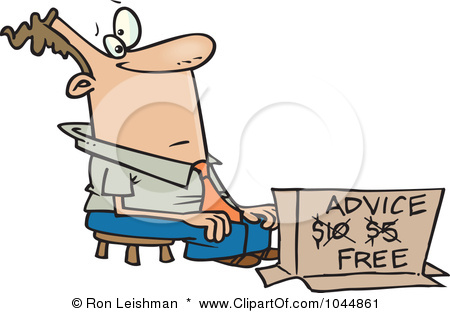
In the meantime, well-intentioned people should consider dispensing with absolute certainties and free advice - especially if they are not personally affected by autism. I assure you that, yes, ASD parents have heard it all. I don’t know any one of us who hasn’t obsessively searched the internet for any and all therapies and information. We shouldn’t have to defend what courses of treatment we have chosen to pursue for our children, though we might want to discuss how it is going. We have enough problems struggling over the right thing to do without worrying about other people’s good opinions. And even when we have decided, we still second guess ourselves and obsess. Most people wouldn’t dream of interrogating a cancer patient about her treatment choices. It would be nice if they wouldn’t do the same to parents of autistic children.
What we sure could use are hugs, friendship, and a genuine interest in our child and families. Invitations to child-free get togethers, movies, or a run for a mani-pedi. What special-needs parents really need is support, not suggestions (unless asked, of course).
That’s something that all of our endless hours of searching, reading, and learning can’t provide — the truly needed benefit of simply spending time with a good friend and having someone take care of us, even for just a few minutes.
This guy said it best:
“When a friend is in trouble, don’t annoy him by asking if there is anything you can do. Think up something appropriate and do it.”
- Edgar Watson Howe
(Exiting, looking around nervously to see if someone is going to throw something at me and stepping down off my soapbox…) :)
If you enjoyed this post, you might like (language alert!): Jillsmo’s “Autism and Vaccines: My Opinion”.



 I’m learning more than I ever wanted to know these days. Lessons about isolation, humility, frustration, real fear, unconditional love, what’s important, patience, gratitude, and so very much more. But what I have really learned the most about is friendship. Friendship takes on a whole different meaning when your life is affected by ASD - or any crisis or special-needs issue that affects your child. For, no matter how much your friends love you, there are some things in life that you cannot possibly understand until you have experienced them. Please do not misunderstand me. I have dear, dear friends who have kept me sane throughout the last year of panic, paralyzing fear, occasional depression, sometimes regression, moments of joy, and my inevitable obsession with learning more about my child’s condition. (It’s even worse when you are a librarian. lol) They have tolerated me obsessing, repeating myself, forgetting to ask about their lives, and every other way I have slacked off in the friendship department over the past year. (You guys know who you are, and I love you.)

 This isn’t an app for autistic children so much as an app for parents,teachers, and therapists of autistic and other special-needs children. Quite simply, it is an app that is a searchable database of other autism apps - broken into categories such as behavior, choice-making, art, ABA, books, cause and effect, sensory, math, reading, writing, and much more. The range of apps in terms of age, skill, and level of communication is impressive. They also have featured apps by recent release for those parents in the know app-wise. A must have for autism app users and FREE.


