11 Things I’ve Learned Since Becoming a Special-Needs Parent

A few days after I published this post, the nice folks at WordPress “Freshly Pressed” it. A big honor and one I am very thankful for. Because of that, I ended up meeting lots of new readers and bloggers. Thanks so much, WordPress!

1. Not knowing is a lot harder than knowing. Yes, there is a lot we can do via therapy to help our children walk, talk, learn, etc. But the hardest thing to admit is that most of it is simply up to their brain and its wiring. There are no certain predictors that a special needs child will develop speech, be able to read, be potty-trained, or become self-sufficient . Good signs, yes. But nothing is certain. The not knowing can drive you crazy if you let it.

2. The internet is a blessing and a curse. On one hand, there is valuable information out there. Yet, information overload can get you stuck. You end up reading too many awful things — that often don’t apply to your child at all — and it can deplete your hope and make you paranoid.

3. Connecting to the special-needs community (whether it be acquaintances, support groups, or the internet) can be both a lifesaver and bummer. It is vital to find people who know what you are going through. Yet, sometimes it can produce even more negative feelings. Since there is always someone who has it worse than you, it can make you feel guilty for complaining. And, since there is always someone else who has it much better, you can sometimes forget that, when it comes to parenting, stress and worry are relative. Those people are just as immersed in their concern over their children as you are and, understandably, aren’t grateful simply because it could be worse. It can always be worse.

4. Holidays and special events magnify the situation. Birthday parties are no longer joyful events. Your special needs child is in an unfamiliar setting, one with all kinds of new dangers. You actually have to observe typical children alongside your child, so his delays and social difficulties are painfully obvious. People naturally want to know what to buy your child. And you might not know. He might not play with toys. And you will have to endure the present opening and cake cutting that your child is tuning out in front of everyone present. No matter what is said and done, there is an air of sadness. Ditto for Christmas.

5. Well-intentioned people will silence you and add to your frustration. They don’t mean to, but it is human nature to comfort and soothe. Invariably, they will attempt to do so in awful ways. Some will deny there is a problem and say that everything will be just fine. By denying there is even a problem, they effectively silence you and leave you isolated in your own mind. Some will try to remind you how grateful you should feel. And, while gratitude is a great thing, being reminded that you aren’t just makes you feel worse.

6. Picking your battles will take on a whole new meaning. A lot of folks will look at you like you are crazy for “giving in” to a 24/7 diet consisting of nothing but chicken nuggets and crackers. Even more will judge you for “giving in” to what they view as tantrums and being spoiled. You, however, know that therapy, joint attention activities, and getting to school are the real nonnegotiables.

7. People will surprise you. Causal acquaintances will step up to be better friends than the friends you most believed you could count on. There is nothing like becoming a special needs parent to give one clarity.

8. Doctors and other experts really don’t know everything. Your pediatrician and other persons doing behavioral screening may not see what you are so worried about and may try to convince you nothing is wrong. They may encourage you to wait and see. You will want to believe them and may forget that child development really isn’t their speciality.

9. If you aren’t a naturally assertive person, you will have to become one. People ranging from loved ones to Early Steps to the school system will give you a lot of reasons why they can’t meet your child’s needs. Even if it goes against your nature, you will have to fight for him. You will have to insist — which is both harder and easier than you might expect.

10. It’s easy to neglect others when you are caught up with the needs of one child. You can forget the importance of date night with your spouse. You might forget a friend or loved one’s birthday. You might realize that your typically developing children aren’t getting enough attention from you. And you might realize you are not taking care of yourself and are about to fall apart. You will have to figure out a way to stay both connected and together. This is hardest thing to learn and do of all.

11. You will develop an appreciation for the little things. There are moments of interaction and progress that will steal your breath. Hugs and kisses are unbelievably precious. And you will understand why this little soul was given to you. It’s because you are a perfect match for one another. And that is what sustains you through everything else.

So, what about you? What have you learned?

If you liked this post, you might also like these:

Letter to My NT (Neurotypical) Child

An Apology From Your Child’s Former Teacher

Reply to a Disgruntled Reader

10 Things I Wish My Mother-in-Law Hadn’t Said About My Autistic Child — And the One Thing I Wish She Had

From the Rooftop: Autism Disclosure

Dear Friend Whom I Haven’t Seen Much of Lately

Stirring Up a Hornet’s Nest: Free Advice and the Vaccine Controversy
Letter To My Neurotypical Child

Dear Bronwyn,

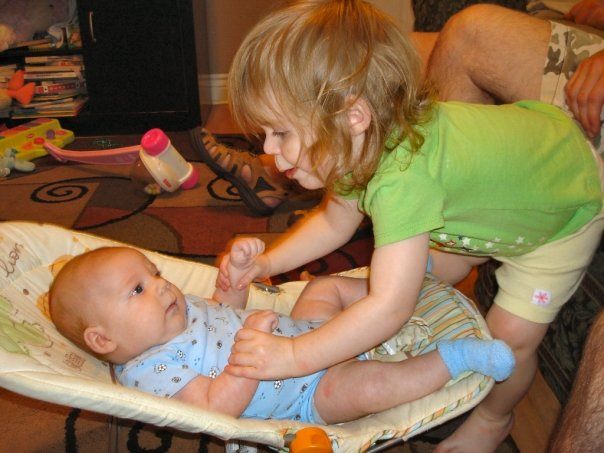
Last night, you went to your grandma’s house and helped your cousins put up her Christmas tree. All of you are little right now. You are 4. Your brother Callum is almost 3. Because you are so young, you have not yet noticed that he is different from other little boys. You didn’t understand the significance when one cousin asked tonight, “But if Callum can’t talk, how can he ask Santa for what he wants for Christmas?” Sweet child that you are, you have already decided to ask for him.

But, that innocent question got me to thinking. It got me thinking about hard things and tests of character that you don’t yet know are coming. Right now, you summarize everything your brother is not yet able to do with, “That’s because Callum is a baby. He needs our help.” Because you are so little, you have not yet noticed that Callum and your cousin are the same age - born just five weeks apart. So, no, Callum is not quite a baby any longer. It just seems that way now.

It won’t always seem that way. As he gets older, people are beginning to notice the things that he is not yet able to do. Your brother has a condition called autism spectrum disorder. Lots of people have this. And, like you, they are all different. Some of them are so affected by it, that they have a hard time communicating, making friends, and taking care of themselves. Some of them are quite smart and make amazing contributions to the world, but seem a bit odd. Most fit somewhere in between, and we just have to learn about them the same way we do everyone else.

And, the thing is, despite having a lot of differences. we have a lot more in common. For they are people just like you and me. They have fears, curiosity, and interests. They love, cry, and laugh. They are sad when others are mean to them. They want friends like everybody else. Autism spectrum disorder can rob those we love of the things they want and things we want for them. While autism can be a fascinating thing, it can also be a sad one.

Unfortunately, there are people out there who feel so bad about themselves that they think the way to get attention is to be mean to people who can’t defend themselves. Those people are called bullies. As much as Mama and Daddy want to protect you from them, those bullies are one day going to say mean things about your brother and maybe even you.

Baby, here’s where things are going to get tough. Because, despite how much you love your brother, you are still a perfectly normal little girl. You will wish with all your heart for those bullies to leave you alone. You will have moments when you wish he didn’t have autism. You will be embarrassed when he says and does strange things. You will hope your friends don’t see that, and you will be horrified the day they do. He may ruin special things for you. And, in your hardest and saddest moments, you may wish to not have a brother at all. To make things even worse, you will then feel guilty for feeling that way. It’s going to seem like you just can’t win.

So let me tell you something I want you to remember. Baby girl, I have faith in you. You may be wondering how, my having written this when you are only four years old, I can say that. But a mama just knows. You have been you since the day you were born. So has your brother, for that matter. Not only do I love you, I happen to like you. For you are many things I am not. You are fearless — not afraid to ask and say what you think. You are a social butterfly — not afraid to talk to anybody. You are always ready for fun — never shy to dance and sing in front of whomever. And you are worlds smarter than I ever dreamed of being.

So, you’ve got a lot going for you in terms of tools to help you handle those bullies. Because you are so fun and likeable, you will have no trouble finding the kind of friends who will care about you for you — and not try to make you feel bad for your brother being different. Because you are brave, you will stand up to those teasing you and Callum. Because you are smart, you will help teach Callum how to stand up for himself. And, though I never want you to pick a fight - and do want you to learn how to turn the other cheek when called for - I promise I will never be angry at you for standing up for what is right. It’s hard sometimes to define what is right. You’ll know it when it happens.

Sometimes standing up for what is right comes with consequences. Sometimes it means losing the good opinion of people who aren’t worth yours. And sometimes, which hurts most of all, it means losing people you thought were your friends. Yet it also comes with good things. You and all the people who matter will be proud of you — and you’ll be proud of yourself. You will make new friends, those whom you value more than the ones you mourn. You will learn how to appreciate all different kinds of people. You will be far more mature than even many of the adults you know. And you will have made the world just a slightly better place for Callum. You will be his hero. Not everyone has a chance to be somebody’s hero. I have a feeling you will be an awesome one.

It won’t be the easiest thing to do. Sometimes you may feel angry or unwilling. Sometimes you might feel bad for yourself. When those feelings happen, I want you to remember something else. As much as I love your brother and am often caught up in his needs, you are also my child. Your hopes, fears, and happiness are just as important to me. When you get caught up in negative feelings, by all means come and tell me. Talk to someone. Allow yourself to be human, even if you then have to turn around and be someone’s superhero all over again.

And once you have let off a little steam and taken a deep breath, continue to be the person I have faith you can and will be.

You will make me proud. You already do.

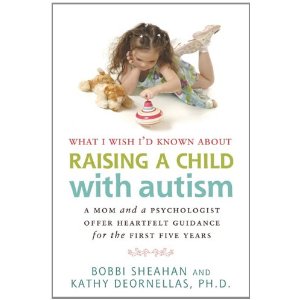
Cool Quotes: Bobbi Sheahan with Kathy DeOmelias

Quote

“I don’t care if you have the most helpful relatives in the world; if the cost of their help is that they drive you crazy, their help ain’t helpful.”

-Bobbi Sheahan with Kathy DeOmelias
(What I Wish I’d Known About Raising a Child With Autism: A Mom and a Therapist Offer Heartfelt Guidance for the First Five Years)


From the Rooftop: Autism Disclosure

Last year, when I made the realization that my then-20 month old son was showing clear signs of being on the autism spectrum, I shared my concerns with a few people. Those people had one of only two reactions. The first was denial. I was told that my son was too young, too cute, too social, and the oft-repeated “But he’s a boy. They develop later than girls.” I understand this reaction. Parents often worry for nothing — especially about early development. Boys are different from girls in their development. And, yes, my son’s spectrum behaviors are somewhat atypical. (As for being too cute? Well, I don’t deny for a moment that he is The Cutest Little Boy in the World, so there is that.)

It was the other reaction that left me somewhat disconcerted and admittedly…torn. I was immediately told by several people to keep quiet about it. I’m not suggesting that they didn’t want us to seek help for him. They did. But they also insisted that we should protect him from any stigmatization by keeping it a secret. Not wanting to make any irreversible mistakes, initially we followed that advice. Only close friends and family were told, along with my administrators, who would inevitably notice all of the days I had to be out for assessments, appointments, hearing tests, etc.

But as the months passed, I found this advice difficult to follow. We live in a small city. One tends to bump into acquaintances in one of only two therapy centers in the county. Family friends know that ASD in the family. Inevitably, one member of the family is incapable of keeping a shut mouth. To state the obvious, it gets out. In our case, because Callum has some indicators that he may one day be high-functioning, I found myself wanting to clarify his situation as being hopeful rather than bleak. So, while I initially intended to protect his privacy, life happened, and now folks know.

Yet it wasn’t mere inevitability that decided the secrecy issue for me. What decided it were my experiences as a teacher. After years of working with ASD kids in middle school - in a range of severity and ability - I have reached the conclusion that not only should ASD not be shrouded in secrecy , it should be shouted from the proverbial rooftop.

In my sixteen years working and teaching in multiple schools across the school system, I have met a lot of ASD kids. While they have all been verbal (nonverbal spectrum kids in this county usually attend a special-needs school), their functioning has varied from non-reader to academically gifted and from requiring a full-time aide to being completely self-sufficient. I have also worked with kids who were clearly - to persons with any sort of knowledge of autism spectrum disorders - clearly autistic/Asperger’s, but were never diagnosed due to their families’ desire for secrecy and a refusal to have them evaluated for needed services that might “put a label” on them.

In addition to ranging in severity, function, and awareness of their condition, they have also varied in the positivity of their middle school years. In my experience, the ASD kids on the more severe end of the spectrum fare a little better in terms of teasing and bullying. Their behaviors are so obvious that the typical kids seem to “sense” their differentness. The bullies among them don’t bother as much to target those kids as they don’t give as satisfactory of a response to teasing. This is not to imply that severe ASD kids don’t suffer from bullying. They do. But most middle-school bullies prefer a victim who will provide a little more “entertainment” and interaction.

The ASD kids on the higher-functioning end of the spectrum, in my opinion, don’t fare as well. Their differences and needs are perceived as weird or deliberate, and they suffer all the negative attention that follows. Because their diagnosis is known, however, school staff try to be on the lookout for such things and often make accommodations to help them navigate around the bullies. We try to pair them up with more sensitive students and have plans for them on special events days.

But the ASD kids who are never diagnosed or whose condition is not revealed? They have it worst of all. These kids, whose families- and sometimes even doctors and teachers- want them to be viewed as “normal”, have received little to no help whatsoever. They have endured years of criticism about their poor handwriting, clumsiness, social awkwardness, etc. They have been left alone in the world, trying to navigate a mine-field of subtle human behavior, facial expressions, and unwritten rules of social norms. These kids could have received speech, occupational, physical, and cognitive therapy. They could have been taught how to interpret otherwise inexplicable-to-them behaviors of the world around them. But they get nothing. Their middle school years are pure hell. They don’t even know themselves why they are different. Imagine being that intelligent and not knowing why your life is so hard.

A desire for secrecy - as well as the well-intentioned desire to “not stigmatize” them - denies these kids years of help and the understanding of others. To me, that’s unforgivable. Because in the ASD world, that level of high-functioning is a gift horse you just don’t look in the mouth.

Just imagine how years of speech, occupational, and cognitive therapy could have benefitted them. Would they still be autistic? Of course! But they could have been autistic with friendships and accomplishments and far fewer memories of bullying and humiliation. I pray each day that my son learns to speak in sentences and that his joint attention improves to the point of being able to learn academically. I pray each day for him to have the opportunities the high-functioning kids have. I also pray that, no matter what his level of functioning, that I will find the right words and actions to help him fit into his world.

Yet all I have seen with regard to autism disclosure is…nothing. Either the autistic child’s functioning is so low that the other kids just sort of naturally leave them alone or their functioning is so high - but so unusual as to be weird - that the other kids tease and bully them. I have yet to see a moderate to high-functioning child who understands his own condition enough to help others understand or a parent or counselor (with parental permission, of course) come into the classroom and visit with the other students to explain it for him.

The thing is, I really do believe that could make a difference. It is amazing how typical kids can and do often rise to the occasion when something is explained well to them. Will bullying still exist? Of course. You can’t be different and not experience it at all. But when you point out the obvious, you, to some degree, disarm those who would have done it for you. You educate others and prepare an easier path for yourself. At the very least, you put the world on notice of how you expect to be fairly treated and can then reasonably expect to hold them accountable. Until then, you can’t say they really know better.

I am certain that there are those and will be those who believe that I should keep Callum’s challenges quiet. And I know they mean well. But I’m coming at this with the hope that his abilities will be such that he will need me to help clear that path for him in the regular classroom. I’m hoping his functioning will be at such a high level that he will seem merely odd, rather than incapable, and need the understanding of his condition by those who might not otherwise have perceived it.

I might not get what I want. He might never progress beyond a few words and gestural communication. If that’s the case, we will love him and help him to be the best and happiest Callum he can be. If that’s the case, then our revelation of his ASD status will be moot. Everyone will know anyway.

But if it isn’t the case, then I’ll still be the eye in the sky reporter, watching for trouble, pointing out roadblocks, and suggesting other routes. I will visit his class and help his classmates to understand. I will insist that not only his teachers be present for initial parent conferences but also any para-professionals, administrators, office personnel, or cafeteria managers who might need to know who he is and why he does what he does. I will continue to do those things until he can do them for himself -so that I will never see the look of grief in his eyes that I have seen in so many ASD kids’ eyes. I might not be able to change the world. But, by avoiding secrecy and ignorance, I can help to improve his.

And at the very least? I intend to put them on notice.

Interview and Guest Post Over @Caffeinated Autism Mom

I was contacted a few days ago by Caffeinated Autism Mom and asked if I would be willing to share my “Apology” post and be interviewed for her blog. Of course, I was happy to do so and, being just a “baby blogger”, am quite flattered to be invited by a real blogger who actually knows what she is doing.
Caffeinated Autism Mom is a stay-at-home mom with two boys on the autism spectrum — and a self-proclaimed “coffee connoisseur”. I really like her blog and think you will too. You can check out both the interview and the post here: http://caffeinatedautismmom.blogspot.com/2011/12/guest-post-flappiness-is.html.

Maybe I can sweet-talk her to guest post over here as well? Perhaps an offer of a scone and, oh say, a cup of coffee might entice…? ;)

Be sure to check out Caffeinated Autism Mom also on Facebook and Twitter.

A special thanks to Caffeinated Autism Mom. :)

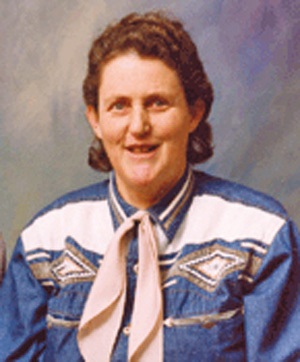
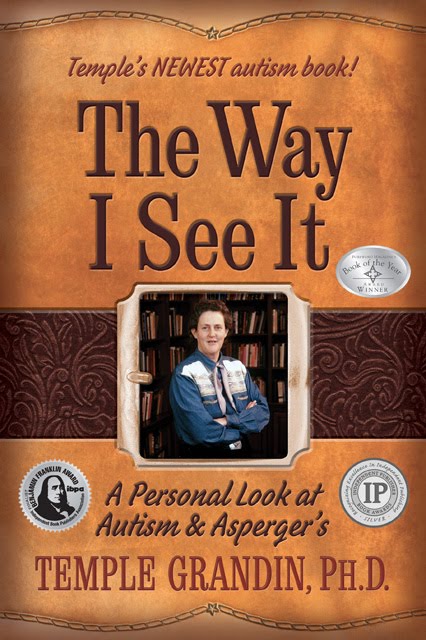
Book Review: The Way I See It by Temple Grandin

In Thinking in Pictures, Temple Grandin riveted a reading audience who had only the movie “Rainman” as an introduction to autism. While “Rainman” was a fascinating portrayal of an autistic savant, those of us living with, working with, or loving someone with autism knew that savants represent only a small percentage of autistics. Because so very many persons with autism are unable to convey the complexities of their thinking, autism itself remained shrouded in mystery. Then Thinking in Pictures exploded upon the scene and gave people their first glimpse into the mind of someone living with ASD. For this reason, Temple Grandin is to autism what Hellen Keller is to the blind and deaf. She helped make the unknowable a little easier to understand and became a hero to many Americans.

In The Way I See It: A Personal Look at Autism and Asperger’s, Grandin steps back from her personal narrative and addresses the subject of autism with parents, teachers, and other caregivers in mind. In The Way I See It, Grandin focuses not on what it is like to have autism or Asperger’s, but on what we must do for our ASD children – a how-to guide of sorts, especially for parents seeking a starting place on their new journey.

This book is a compilation of articles Temple Grandin has written for Autism Asperger’s Digest over the years. She addresses such topics as:

  1. Diagnosis and Early Intervention
  2. Teaching and Education
  3. Sensory Issues
  4. Understanding Non-verbal Autism
  5. Behavior Issues
  6. Social Functioning
  7. Medications and Biomedical Therapy
  8. Cognition and Brain Research
  9. Adult Issues and Employment.

What I like about this book is that Grandin does not merely set herself at a distance and inform you dispassionately about the issues. She actually tells us what it is most important to do for each child, what helped her, what to avoid, and how to help ASD individuals identify and develop their personal strengths and talents. She is passionate about what must be included in each ASD child’s basic education and character development and the importance of perseverance. Finally, she addresses those with ASD directly, giving advice to them about how to find their passion, how to fit in, and how to market their talents.

The Way I See It is an excellent book for parents new to ASD, grandparents, teachers, etc. It is a great introduction to autism without overwhelming the reader with overly detailed discussion about complex subjects such as speech and social relationships. There are excellent books that delve into those areas to a deeper degree. This is not one of those books, nor is it intended to be.

Dear Friend Whom I Haven’t Seen Much Of Lately

Dear Friend,

You have no doubt noticed that you haven’t seen much of me lately. Maybe weeks, maybe months, maybe years. I bump into you in the grocery store, and we always talk about getting together soon and about how ridiculously long it has been. And it really has been too long. I really have wanted to see you. But I will admit that sometimes when you call, I don’t answer the phone. Often it is because I can’t talk amidst a cacophony of banging, screeching, and crying. Mostly it is because I have been standing there for some time trying to figure out just what it is that my child wants so badly, but doesn’t have the words to ask. He’s upset, and there will be no conversation if I don’t figure it out. I intend to call back, but because he has so much trouble going to sleep and staying asleep, I often just give up and hope for another opportunity.

But sometimes I don’t answer for no reason at all. Yes, I swear I’m eating, brushing my teeth, and taking showers. Don’t worry — I’m not that far gone. I simply find it overwhelming at times to even think about making casual conversation. There is so much to catch up on, and I don’t have the energy for that. So, please believe me when I tell you -It’s me, not you.

But you probably already knew that. I’ve heard the other end of the phone go quiet and then realize that I have been talking for a long time about my child. It’s often the end of our time together when I realize that he has been the sole topic of conversation. I don’t mean to do it. I’m simply overwhelmed and leaning on you in the same way I used to about other sorts of things. Except that worries about him are now a broken record in my mind. I forget to ask you about your kitchen renovation, your vacation, what is going on with your sister-in-law, or your promotion. And even when I do ask, I’m distracted and don’t seem to have the capacity for all the details. I really do care about you and your life. It is simply that there is only so much room in the active part of my mind, and right now it is taken up with him, his needs, and his myriad of therapy sessions each week.

You are still the great, caring person you always were. And I know that you mean well when you ask me to “bring the kids” to some get-together you are having. I know that your feelings will get hurt when I inevitably decline. But, you see, when everyone else is sitting back and laughing — watching their kids play in the pool — I am running around trying to make certain that my curious little tester of bouncing properties isn’t destroying your home. You have a lot more knickknacks and breakables than me these days. I’m trying to make certain that he is fed, because he won’t eat any of the child-friendly foods you so kindly have served. And, because you don’t have a fence or child-proof lock on the exterior doors or safety gate on your stairs, I can’t spend any time with you while there anyway. It becomes a stressful experience that I avoid like the plague. And, even if I do get a sitter and come without the kids? I spend my time feeling guilty about not bringing them.

So, that’s where I am right now. And why I haven’t been calling. I really would like to have lunch with you. So, yes, please ask. But I’ll need you to do me a favor. Please give me several days’ notice. Because I don’t want to bring the kids, and I need to make arrangements. Please pick an affordable restaurant. Because all these therapies, treatments, and special diets are costly. Please let me go on a little while about my child. Because it explains so much about the Me of Now.

And then be sure to sweetly say, “Now let’s talk about ME” and proceed to do so. I can take it, really. Sometimes, I just need to be reminded. :)

If you liked this post, you might also enjoy:

“Love Life, Be Brave.”

Speak No Evil: 8 Things Family, Friends, and Complete Strangers Shouldn’t Say to Parents of Autistic Kids”.